The browser that never shipped.
Nine months leading the design team. A finished product. Two weeks from launch.
It felt a little bit like coming home.
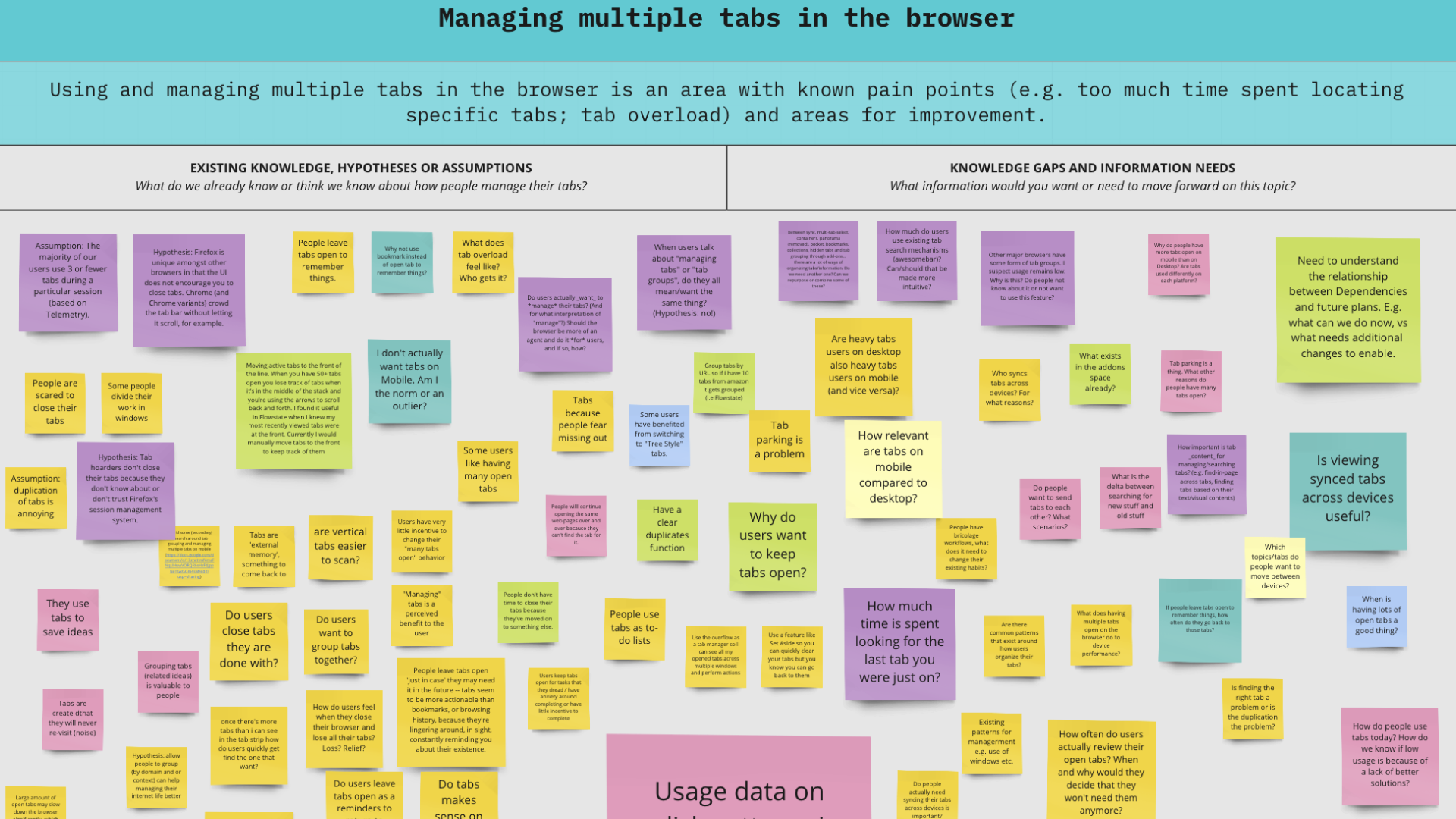
I joined Mozilla as a backfill for a design manager going on maternity leave. The project was a take on a new web browser, but it wasn’t Firefox. The internet felt broken, full of noise, and browsers weren’t helping. They were building a product and needed help getting over the finish line.
This was very compelling to me personally and professionally. My first web design job was building SaaS applications, and Firefox—and crucially Firebug—were critical to me being able to learn front-end development. I had a strong love for the company and their mission.
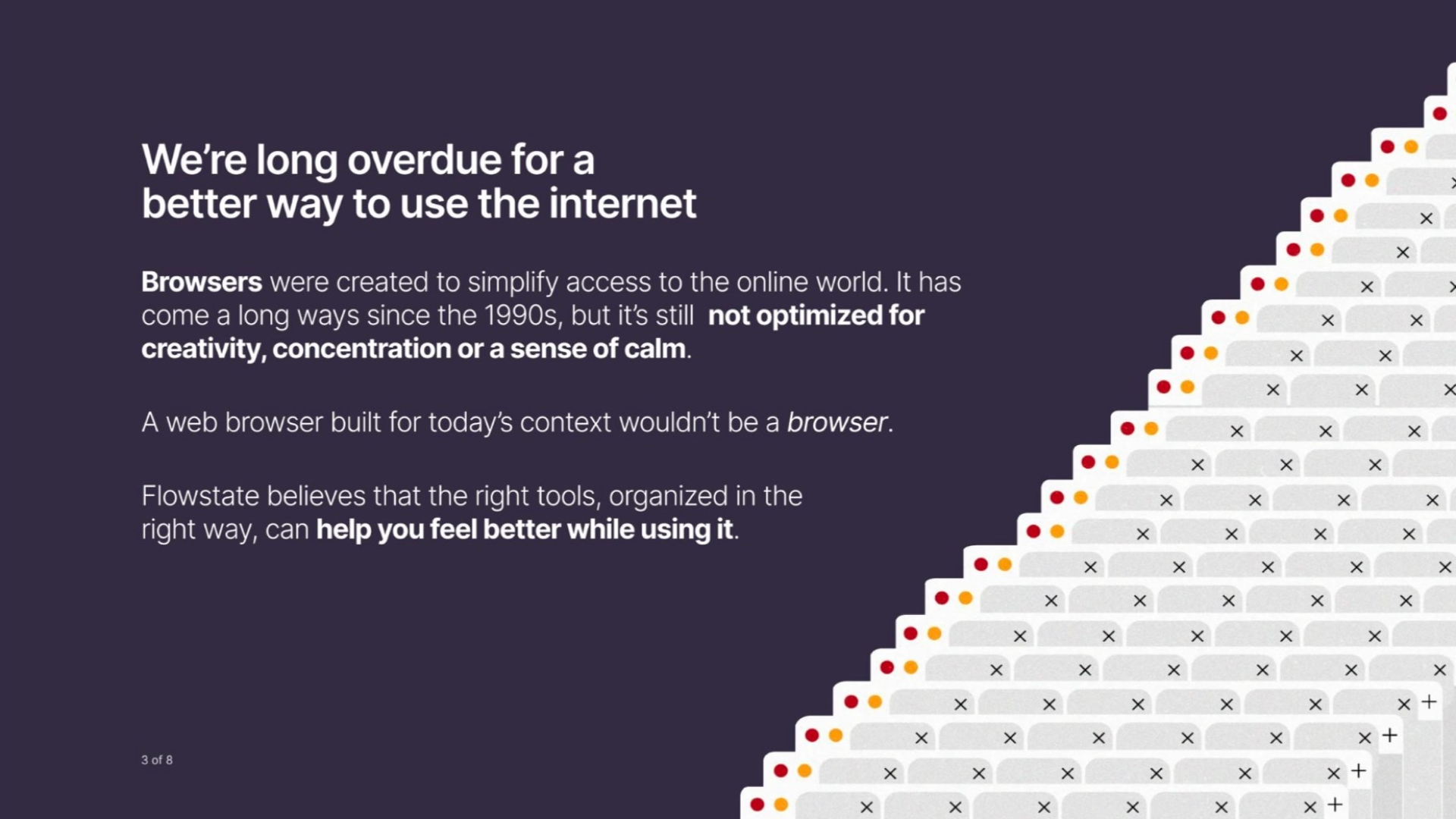
We’re long overdue for a better way to use the internet.
A web browser built for today’s context wouldn’t necessarily be a browser.
The project was codenamed Pro Client. Browsers were created to simplify access to the online world. They had come a long way since the 1990s, but still weren’t optimized for creativity, concentration or a sense of calm.
Flowstate believed that the right tools, organized in the right way, could help you feel better while using the internet.
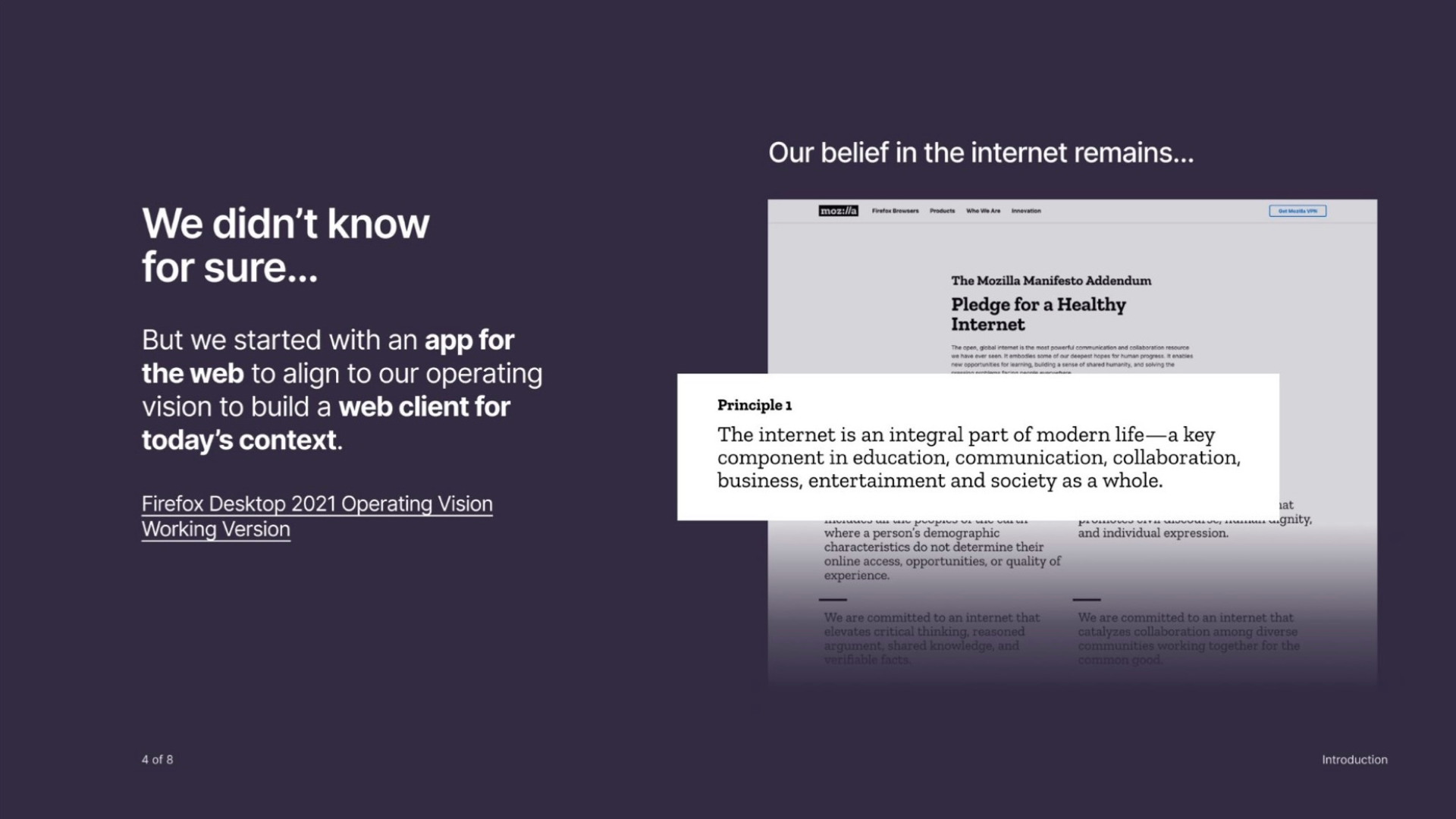
Listen first. Keep the work moving.
This wasn’t a blank-sheet project. The design team included several UX designers and a motion designer. The broader team included PM, software development and research. They already had a sprint schedule and a way of working. I aligned to it.
My job was running the weekly design meeting remotely: checking status, reviewing progress, and setting up breakout times to huddle and work together. We used the early week to make progress, then aligned and reviewed with PM before the broader team review.
I wasn’t there to make the project mine.
I was there to understand what the team had built, keep the spirit of it alive, and help talented people do their best work.
The browser became a different kind of object.
Flowstate questioned behaviors people had accumulated over decades: piles of tabs, buried history, forgotten bookmarks, screenshots and links emailed to ourselves because we were afraid of losing them.
History you could actually see.
Browsing history became a visible, useful surface instead of something buried in a menu.
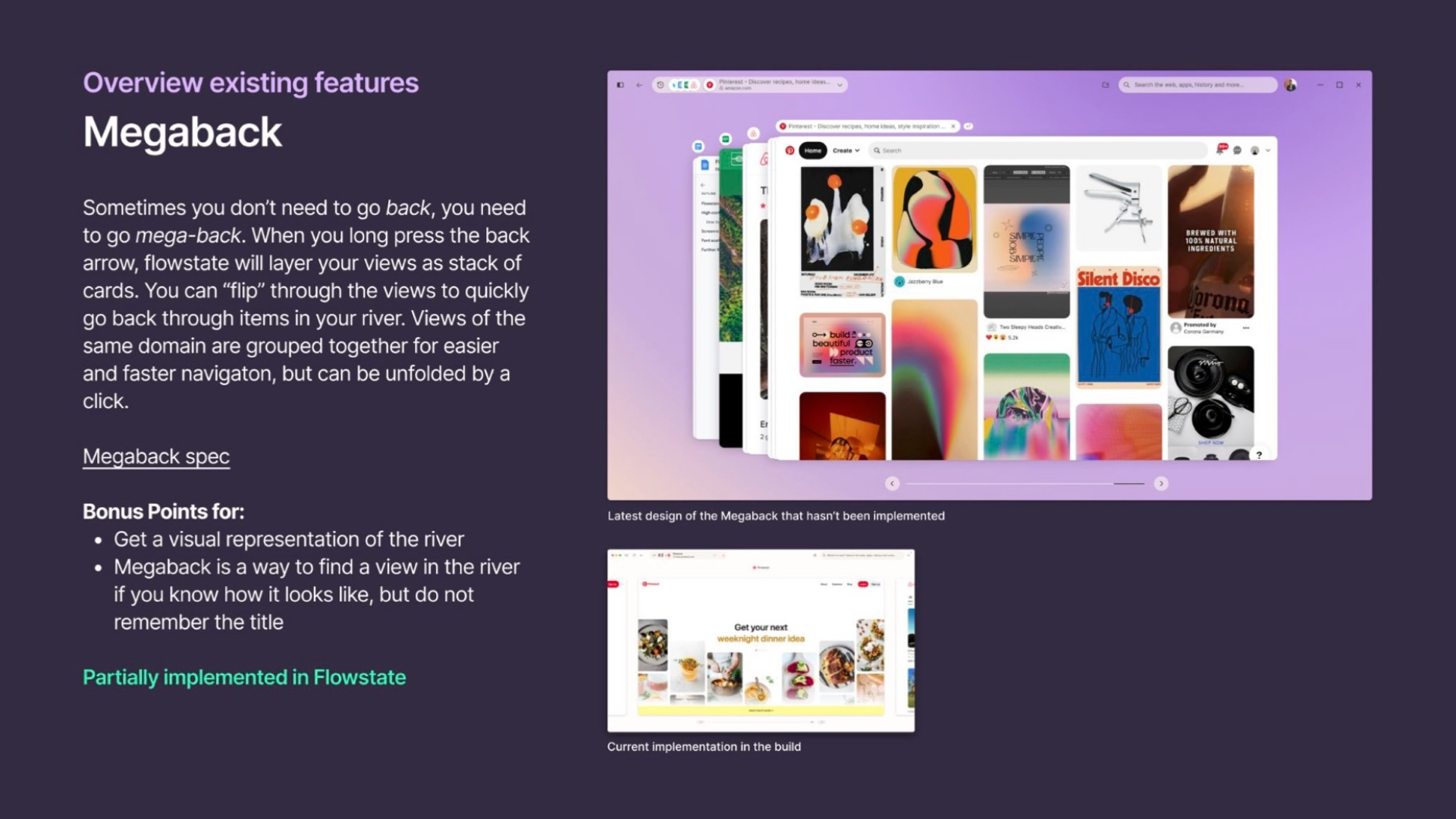
Move through where you’ve been.
A visual way to move backward through groups of views rather than repeatedly clicking Back.
The things around your work.
A persistent place for sessions, meetings, downloads, passwords and frequently used destinations.
More than a URL bar.
Destinations, actions, recent searches and suggestions could work together.
Set Aside.
One button. Everything you have open moves aside for later.
You don’t have to organize it. You don’t have to decide whether every tab deserves to become a bookmark. You simply set the whole thing aside and move on.
It seemed like a feature missing from every web browser.

From concept to something real.
Over nine months the work moved through research, product definition, interaction models, visual systems, detailed UX, motion, specifications and implementation.
This wasn’t a speculative concept deck. There was a working product. We were resolving implementation details with developers, evaluating what was complete and what remained, and preparing Flowstate for release.
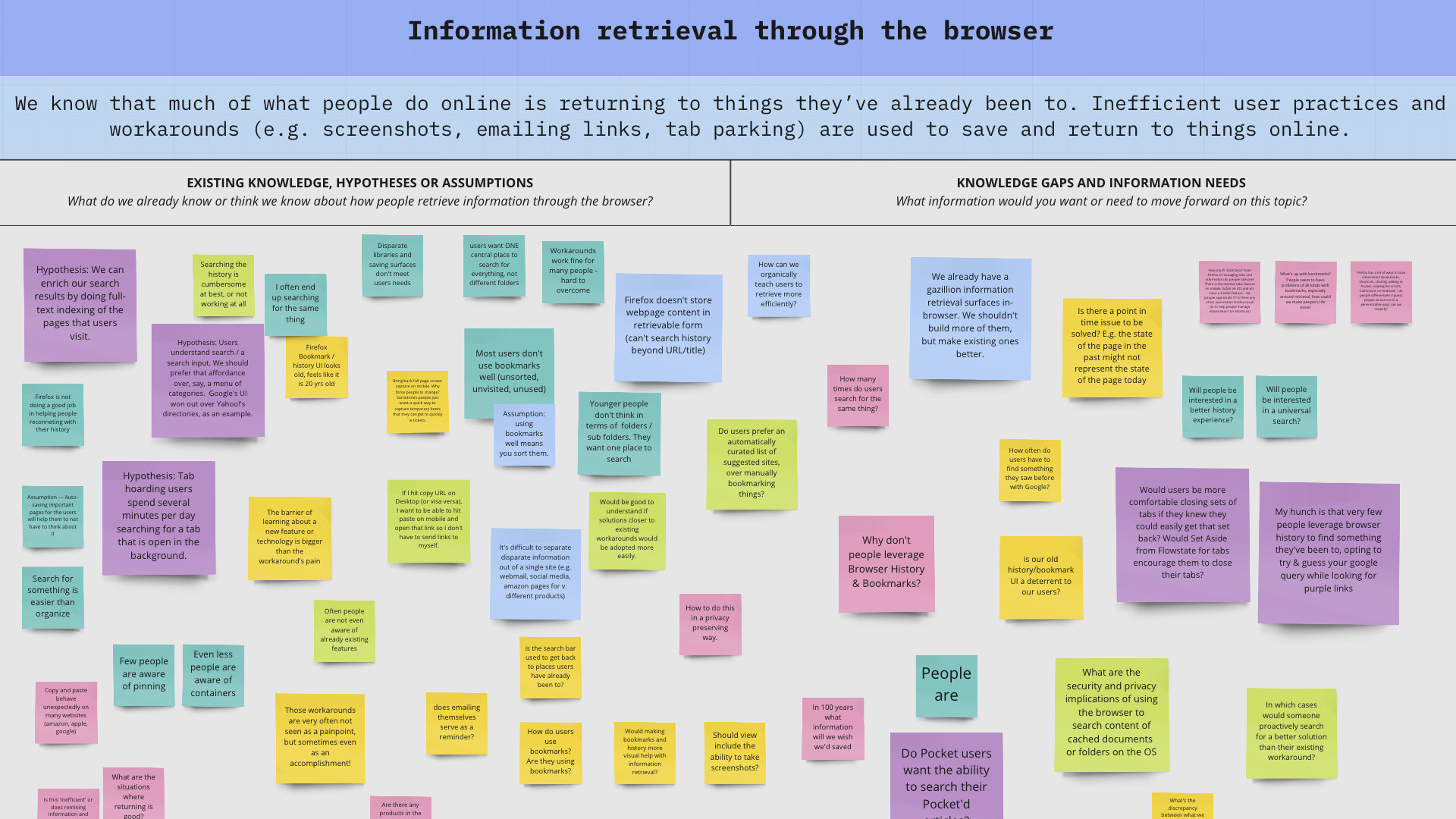
Mozilla cancelled Flowstate.
The product was essentially complete. Sadly, it never shipped.That isn’t what I remember most.
I joined to backfill for Emanuela, the design leader for Flowstate, while she went on maternity leave. Before leaving, she told me Flowstate was also her baby.
I took that seriously.
I wanted to deliver for her and for the team—to let the designers showcase their experience and skills while keeping the spirit of the project alive. Emanuela could see the remote reviews and presentations while she was away.
When she returned, she told me she had seen how the team worked while I was there.
“I saw. You took care of my team.”
Mozilla asked me to stay.
I want to leave the product and the team better than I found them. That’s what I try to do every time I take on a project.